





When Is It Too Late for a Hair Transplant? Limitations of Hair Transplantation in Advanced Baldness
Is It Really Too Late for a Hair Transplant?
There is no specific age or single stage of
baldness that automatically makes a hair transplant impossible for everyone.
Age alone is not the most important factor.
What matters more is the condition of the donor area, the size of the bald
area, hair density and thickness, and the likelihood of continued hair loss in
the future.
For example, someone with severe baldness may
still have a strong donor area and could achieve a significant improvement with
one or more transplant sessions. Another person with moderate baldness but a
weak donor area may be a poor candidate for surgery.
This is why a detailed assessment of both the
donor and recipient areas is essential before deciding on a hair transplant.
The Donor Area: The Most Important Factor in
Hair Transplantation
Hair follicles used for transplantation are
usually harvested from the back and sides of the scalp, areas that are more
resistant to pattern hair loss in many patients.
However, the donor area is not an
unlimited source of hair.
Once a follicle is extracted, it will no
longer grow in its original location. Therefore, the surgeon must carefully
determine how many grafts can be safely harvested while preserving enough donor
hair for the future.
For this reason, donor overharvesting
can lead to visible thinning or an unnatural appearance in the donor area and
may reduce future treatment options.
Hair Transplantation for Advanced Baldness:
Norwood 6 and Norwood 7
The Norwood-Hamilton scale is commonly
used to describe the severity of male pattern baldness.
In advanced stages, large areas of the
frontal scalp, mid-scalp, and crown may be affected.
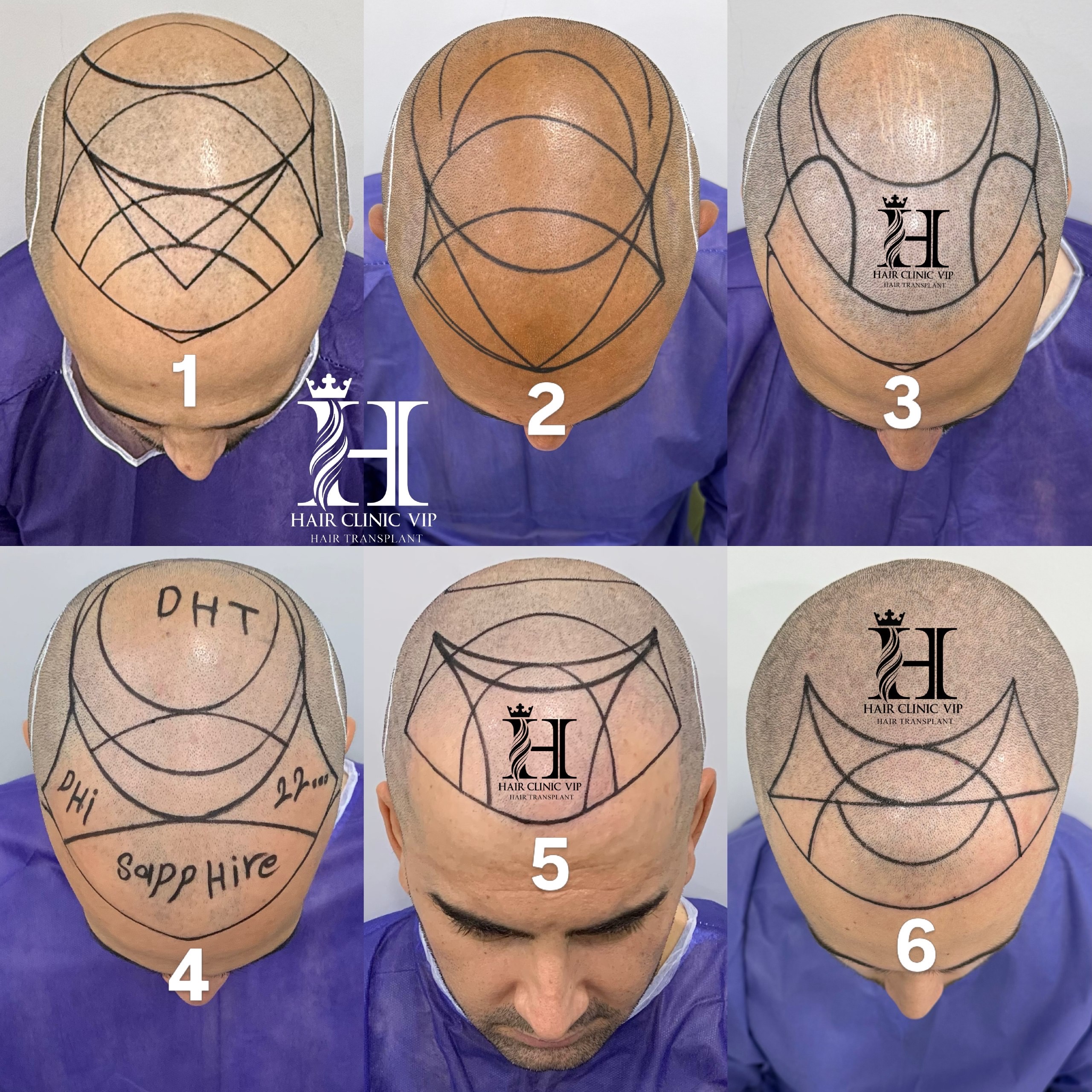
In Norwood VI and Norwood VII, the
bald area can be extensive. This creates a significant gap between the number
of grafts required for coverage and the actual amount of donor hair available.
This does not mean that a Norwood 6 or
Norwood 7 hair transplant is impossible.
However, treatment goals must be realistic.
In these cases, it may not be possible to
restore the same density a person had in their youth across the entire scalp.
Instead, the goal may be to create a natural-looking hairline and improve
coverage in the areas that have the greatest cosmetic impact.
What Factors Limit Hair Transplantation in
Severe Baldness?
1. Low Donor Hair Density
If the hair on the back and sides of the
scalp is also thin or sparse, the number of available grafts will be limited.
Harvesting too many grafts in this situation
can compromise the appearance of the donor area.
2. A Large Bald Area
The larger the bald area, the more grafts are
needed to achieve adequate coverage.
However, a larger recipient area does not
mean that more donor hair is available.
Therefore, the surgeon must determine where
the available grafts will provide the greatest cosmetic benefit.
3. Miniaturization in the Donor Area
The donor area may appear healthy at first
glance, but a detailed examination can reveal hair follicle miniaturization.
This may indicate that some donor hairs are
also susceptible to future thinning or loss.
4. Active Hair Loss
If hair loss is still progressing rapidly,
performing a transplant without considering future loss can result in an
unbalanced appearance.
For some patients, the doctor may recommend
stabilizing the hair loss before proceeding with surgery.
5. Unrealistic Expectations
Unrealistic expectations are among the most
important reasons for dissatisfaction after a hair transplant.
In advanced baldness, the goal is generally
to improve the overall appearance and create natural-looking coverage,
rather than replace every hair that has been lost.
Is a Norwood 7 Hair Transplant Possible?
In some patients, yes.
However, hair transplantation at the Norwood
7 stage is one of the more challenging situations and requires careful
donor-area assessment and long-term planning.
Instead of attempting to cover the entire
scalp, the surgeon may prioritize areas with the greatest cosmetic impact, such
as the hairline and frontal scalp.
In selected patients, multiple sessions or
alternative donor sources, such as beard or body hair, may also be considered.
However, body and beard hair have different
characteristics from scalp hair, so their suitability must be evaluated
individually.
FUE or FUT for Advanced Baldness?
The choice of hair transplant technique
depends on the individual patient, and there is no single technique that is
best for everyone.
FUE Hair Transplant
With FUE (Follicular Unit Extraction),
individual follicular units are extracted from the donor area.
FUE can be an excellent option for many
patients, but very large harvesting sessions can place significant stress on
the donor area if the procedure is not carefully planned.
FUT Hair Transplant
With FUT (Follicular Unit Transplantation),
a narrow strip of skin containing hair follicles is removed from the donor area
and then divided into individual grafts for transplantation.
For some patients with advanced baldness, FUT
or a combination of FUT and FUE may be considered as part of a long-term
treatment strategy, depending on donor characteristics and the patient's goals.
Therefore, the most important question is
not:
“Is FUE better than FUT?”
It is:
“Which technique is most appropriate for the
patient’s donor area, degree of baldness, and long-term goals?”
Can You Have a Hair Transplant at an Advanced
Age?
Older age alone does not necessarily prevent
someone from having a hair transplant.
However, the condition of the hair, donor
area, and overall pattern of hair loss should be carefully assessed.
At an advanced age, it is generally better to
establish realistic goals based on the patient's age, degree of baldness, and
available donor hair. The aim should be a natural and age-appropriate
appearance, rather than necessarily recreating the density of youth.
Who May Not Be a Good Candidate for a Hair
Transplant?
Hair transplantation may be significantly
limited in patients with:
- Severely weak or depleted donor hair
- Extensive baldness combined with a
limited donor supply
- Diffuse thinning throughout the donor
area
- Certain scalp conditions or types of
hair loss
- Unrealistic expectations regarding
post-transplant density
- Previous hair transplants with excessive
donor harvesting
In these situations, a doctor may advise
against transplantation or recommend combining surgical treatment with other
non-surgical options.
How Do You Know If It Is Too Late for a Hair
Transplant?
This cannot be determined accurately from a
single photograph or from the Norwood stage alone.
A professional assessment should consider:
1. Donor hair density
2. Hair thickness and quality
3. Degree of miniaturization
4. The actual size of the bald area
5. The likelihood of future hair loss
6. The approximate number of grafts that can
be safely harvested
7. The patient's goals and expectations
Two people with the same Norwood stage may
require very different numbers of grafts because scalp size, bald-area size,
hair characteristics, and donor density vary from person to person.
Is It Always Better to Have a Hair Transplant
Early?
Not necessarily.
A hair transplant is a long-term decision.
If someone undergoes transplantation at a
young age while experiencing active hair loss and receives an excessively low
hairline without considering future loss, thinning may continue behind the
transplanted area.
This can also consume a significant portion
of the donor supply at an early stage.
Therefore, the right time for a hair
transplant is when a treatment plan can account for both the current condition
of the hair and the potential progression of future hair loss.
Conclusion: When Is It Really Too Late for a
Hair Transplant?
There is no specific age or Norwood stage
that automatically means hair transplantation is completely impossible.
The most important factor is the balance
between the amount of available donor hair and the size of the bald area that
needs coverage.
If the donor area still has good density and
hair thickness, significant improvement may be possible even in advanced baldness.
However, when the donor area is severely
depleted and the amount of hair required to cover the bald area is far greater
than the available supply, complete coverage or high density is unlikely to be
realistic.
Ultimately, the decision to undergo a hair
transplant should be made after a direct examination of the scalp and donor
area by a qualified hair restoration physician.
At HairClinicVIP, the pre-transplant
assessment should go beyond simply estimating the number of grafts. The goal is
to determine what level of natural, safe, and sustainable improvement can
realistically be achieved based on each patient's available donor resources.
Request Consultation
There are many books written about the past, present, and future that require extensive knowledge from specialists to better understand the software.