





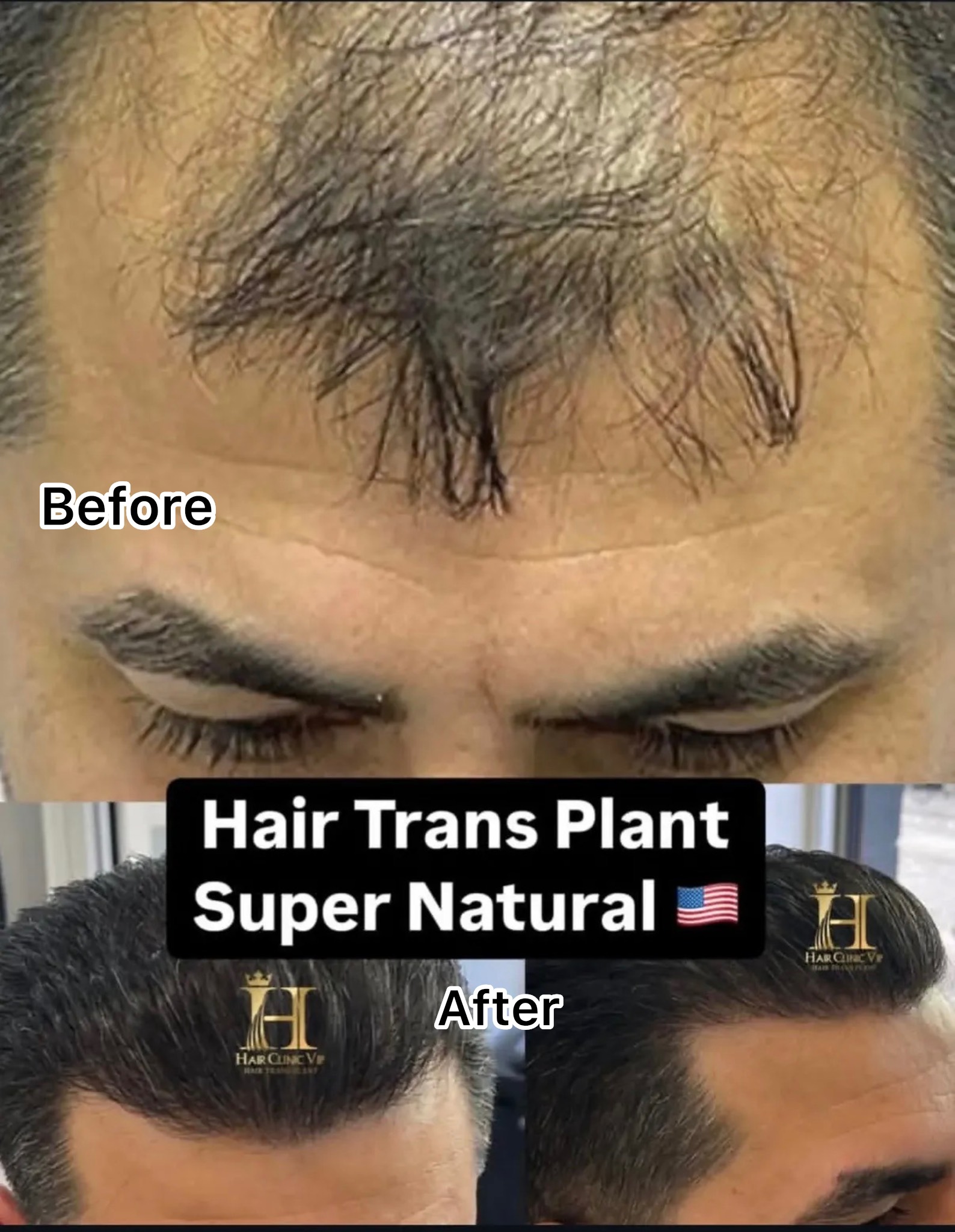
Lifetime Donor Area Management at VIP Hair Transplant Clinic in Dubai: From 25 to 65 Without Wasting a Single Graft
Introduction: Your Donor Area Is Your Lifetime Capital
In any hair transplant, the donor area on the back and sides of
the scalp contains a finite number of follicles that cannot be replaced once
they are overharvested. That is why leading clinics now focus on donor area
management and long‑term
planning instead of a one‑time
“maximum
graft”
session. At VIP Hair Transplant Clinic in Dubai, we treat your donor area like
a lifetime hair bank that must be managed strategically so you can maintain a
natural look from your 20s to your 60s and beyond.
Why Donor Management Matters More Than Graft Count
The safe capacity of the donor area is limited; there is a maximum lifetime number of grafts that can be harvested without creating visible thinning in the back.
Overharvesting leads to patchy, thin donor zones and severely limits your options for future procedures.
Androgenetic hair loss is progressive; if your entire donor bank is used in the first surgery, you may later end up with a transplanted hairline, depleted donor and new areas of baldness.
Clinics that advertise “the highest number of grafts in one
session” often have no plan for how you will look 10–20 years from now.
What Is the Right Age Window to Start Planning?
Clinical experience shows that the 25–45 age range is often ideal
for building a long‑term
hair restoration plan because the baldness pattern is more defined and stable.
Before 25, the final pattern is often unclear, which increases the risk of
needing major corrective work later on. After 45–50, excellent results are
still possible as long as general health and donor quality are carefully
evaluated. At VIP Dubai we never decide based on age alone; we look at pattern
stability, donor density and your realistic goals.
Step 1: In‑Depth
Donor Assessment at VIP Dubai
During your first consultation in Dubai, the donor area is examined through detailed clinical evaluation, magnified imaging or trichoscopy, and density mapping when needed. This assessment answers three key questions:
What is your true donor density, and what is the maximum safe lifetime graft count without making the back look empty?
What is your current and likely future pattern of hair loss, and which parts of the donor must be preserved as a “reserve” for later stages?
Which technique (FUE, DHI or a tailored combination) offers the
best balance between cosmetic result and donor preservation in your case?
Step 2: When Surgery Is Still Too Early (Ages 25–30)
For a significant number of young patients, the best first decision is not to operate but to stabilize hair loss and protect existing hair. At this stage our medical team in Dubai may recommend:
Evidence‑based topical and/or oral medications to slow down miniaturization and maintain density.
Supportive, low‑invasive therapies such as PRP, mesotherapy or low‑level laser to boost follicle health
Lifestyle optimization around sleep, stress management, nutrition and smoking to support long‑term hair stability
The goal is to “buy time” until your pattern stabilizes so that
your donor bank can be used later with maximum efficiency.
Step 3: Designing the First Transplant Intelligently (Ages 30–40)
In this phase the balding pattern is clearer, which allows for a more precise and sustainable surgical plan. At VIP Hair Transplant Clinic in Dubai we follow several core principles:
Focusing on framing the face first – the hairline and frontal zone – instead of trying to cover the entire scalp in one session.
Respecting a lifetime safe extraction percentage, typically around 40–50% of usable donor capacity spread over multiple stages, not all at once.
Spreading extractions evenly across the safe donor zone to avoid lines, patches or a visibly “moth‑eaten” donor.
Combining surgery with graft‑survival
enhancers such as PRP or bio‑enhanced
FUE protocols when indicated.
Step 4: Managing Ongoing Hair Loss and Touch‑Up Sessions (Ages 40–55)
Even after a successful transplant, androgenetic hair loss can continue in non‑transplanted areas. That is why our long‑term strategy in Dubai includes:
Periodic follow‑up visits to detect new thinning zones early and update your donor map.
Planning any second (or third) session strictly within the remaining safe donor capacity so the back still looks full and natural.
Continuing medical and supportive treatments to slow further loss
and reduce the need for frequent additional surgeries.
Step 5: Keeping a Natural, Age‑Appropriate Look
(Ages 55–65+)
After 55, most patients prefer a natural, age‑appropriate density rather than a very dense, “teenage” look. In this stage:
The hairline is designed slightly more mature and softer to match facial features and age.
If donor supply is limited, priority is given to the frontal and mid‑scalp zones instead of weak, full‑coverage attempts.
Scalp health and daily habits become critical to preserve the shine and quality of the transplanted hair for as long as possible.
What Makes VIP Dubai’s Donor Management Approach Different?
A true lifetime perspective: every graft we harvest today is calculated against what you may need 10–20 years from now
Scientific donor analysis, including density, hair shaft caliber and scalp laxity, to define your personal safe harvesting limits.
Integrated use of surgery plus non‑surgical treatments to minimize unnecessary depletion of the donor bank.
Structured long‑term
follow‑up and a personalized donor
map for each patient to keep results sustainable over decades.
Call to Action – VIP Hair Transplant Clinic in Dubai
If you are between 25 and 65 and considering a hair transplant in
Dubai, the smartest first step is to understand the true value of your donor
area and build a long‑term
plan for it. At VIP Hair Transplant Clinic in Dubai, your consultation is not
just about “how
many grafts”; it
is about a complete strategy for lifetime donor preservation. Book your
appointment now and let the VIP team in Dubai manage your donor bank like a
lifetime capital that keeps your hair looking natural for years to come.
Request Consultation
There are many books written about the past, present, and future that require extensive knowledge from specialists to better understand the software.